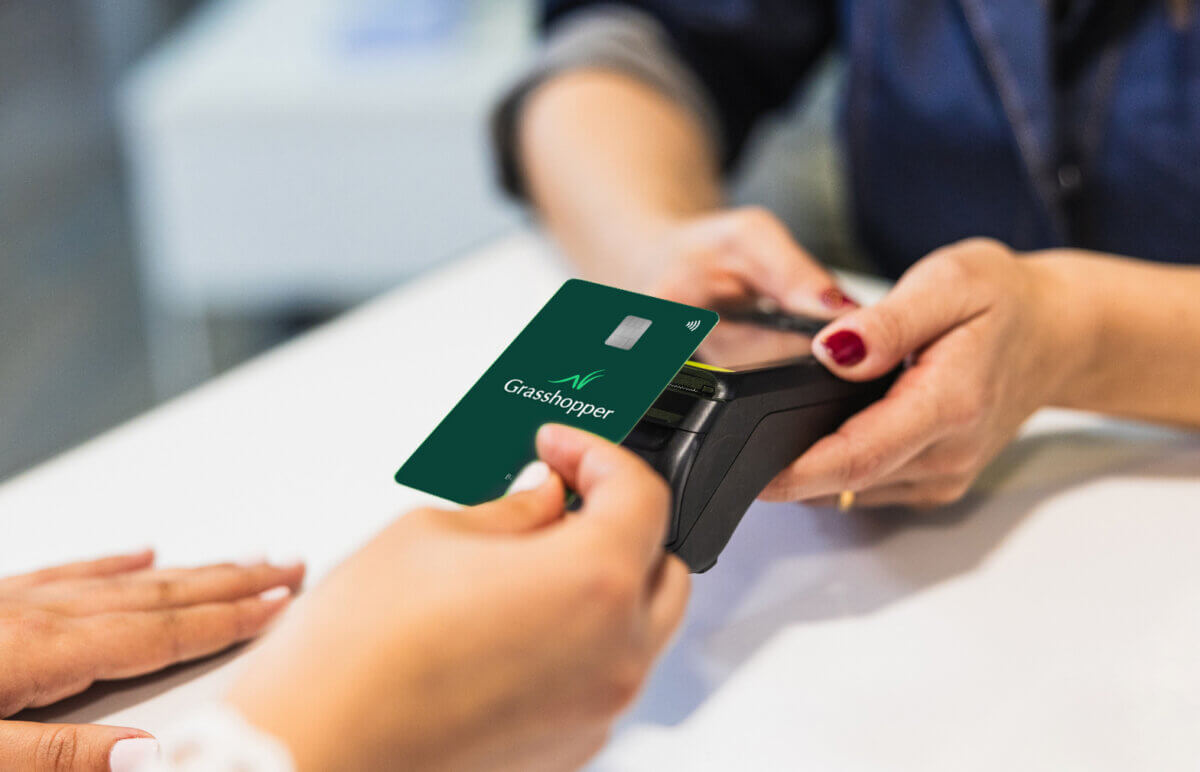
Every month, money leaves your business: supplies, inventory, vendor payments, subscriptions, shipping, and the dozens of small purchases that keep things running. Most owners file that under one word: cost. But what if that spending could generate a return? The solution is already in your wallet. By shifting everyday expenses to a cash back business debit card, you can turn overhead into measurable ROI. Here’s exactly how that works.
Rethinking Return on Spend
The core idea behind return on spend is using the expenses your business already has to generate real value through cash back, interest, lower fees, and smarter controls.
For years, earning rewards meant using a credit card —whether through points or cash back— but at the cost of a balance and interest to manage. Great in theory, but there is one important caveat: if a balance carries over, the interest can outweigh the rewards earned.
A business debit card that earns cash back skips that trade-off entirely. You spend what you already have, and a slice of qualifying purchases comes right back with no balance, interest, or monthly scramble. Just enterprise-level rewards without the enterprise-level debt.
The Mechanics of Debit Card Rewards
To maximize your cash back, it helps to understand the logic behind how it works. The specifics shape how much actually lands in your account.
- Signature-Based Purchases. Across the banking industry, cash back rewards are strictly tied to signature-based purchases. In-store, that means selecting “credit” at checkout; online, it’s usually the default across most platforms, but results may vary.If you notice a major online vendor isn’t triggering your cash back, try paying through a digital wallet like Apple Pay or Google Pay.
- Flat-Rate vs. Tiered. The reward is a percentage of qualifying spend, structured either as “tiered” (higher rates in specific categories) or “flat-rate” (one consistent rate across everything). If your spending bounces around month to month, flat-rate is easier to plan around. While flat-rate cash back is standard for credit cards, it is exceptionally rare for a business debit card, though a few options in the market do offer it. Grasshopper is one of those rare exceptions, providing an unlimited 1% flat-rate cash back on qualifying purchases.
- Stacking Rewards. Some reward programs also let you stack savings on top of your standard cash back by layering merchant-discounts run by certain card networks. Visa’s SavingsEdge, for example, applies automatic discounts at participating merchants (think Lenovo, Microsoft, or Hertz) once you enroll in an eligible card.
The takeaway: not all “cash back” is equal. The structure, the rate, and what counts as qualifying all shape the real return, and a business debit card delivers significantly more value when it gets all three right.
Which Expenses Earn the Most Cash Back?
If cash back is a percentage of qualifying spend, the categories where you spend the most are where the return adds up fastest. For most small businesses and startups, a few categories do the heavy lifting.
- Software and Digital Infrastructure. Recurring software is one of the biggest ongoing line items Tools like Slack, AWS, and other platforms help keep things running, and the costs repeat every month. Because these expenses are highly predictable, even a modest cash back rate compounds into a meaningful return by year-end.
- Digital Marketing and Ad Spend. Ad platforms are often one of the heaviest expenses in any given month. Cash back on this expenditure works like a built-in discount on your customer acquisition cost where every dollar toward reaching new audiences comes back a little, lowering the real cost of growth.
- Travel and Client Hospitality. Travel to meet clients or to close a deal is often unavoidable and a sizable expense. Earning a percentage back on flights, hotels, and meals turns that cost into a recurring return, rather than a sunk cost.
The pattern across all three: these are necessary expenses. The goal isn’t to spend more to earn more, but rather making sure the spending you’re already doing pulls its weight.
Streamlining Expense Management via Virtual Cards
Earning cash back is one half of return on spend. The other half is cutting hidden costs that quietly drain time and money, such as fraud, manual reconciliation, and controlling who spends what.
A virtual card is a digital card number you can spin up instantly, separate from your primary card. That separation does a lot of work on its own:
- Less exposure to fraud. If a number gets compromised, you can shut down that one card without touching your main account and skip the hours of cleanup that come with it.
- More control over team spend. Issue dedicated cards with hard spending limits and merchant restrictions, so your team can buy what they need without open-ended access to your account.
- Easier reconciliation. Tie a card to a specific vendor or project, and tracking spend stops being a monthly guessing game. Plus, instant digital records mean less manual matching at month-end.
The strongest setups go a step further, connecting outside accounts for a full view of what’s coming in and going out, sorting spending into categories automatically, and syncing to your accounting software instead of requiring manual entry.
Spending visibility isn’t technically a rewards feature, but it feeds the return-on-spend mindset: you can’t optimize what you can’t see clearly.
The Real ROI: Cash Back Plus Interest, Minus Fees
Here’s where it compounds. Stack cash back, idle-cash interest, and zero fees in one account, and the math finally works in your favor because the return lands immediately instead of leaving you with points to track and redeem.
This exact combination is what Grasshopper’s business bank accounts were built around. The goal is to give small businesses and startups a setup where every operational dollar is automatically positioned to pull its weight.
- Unlimited 1% cash back on online and signature-based purchases, turning your unavoidable everyday spending into an active return.
- Instant-issue virtual debit cards with cash back, spending limits, and merchant controls built right in to simplify expense tracking.
- Up to 1.35% APY on checking balances, plus up to 3.00% APY when paired with a high-yield money market savings account, ensuring your idle cash is working for you.
- No monthly maintenance fees, so nothing quietly eats into what you earn.
- Access to our marketplace, allowing you to layer savings on top of your cash back with exclusive discounts on popular tools like Slack, Gusto and Constant Contact.