Skip To Content

Top 5 Best Banks for LLCs in 2026

Choosing the right bank for your LLC is one of the most important financial decisions you’ll make as a business owner. This guide breaks down the best banks for LLCs in 2026 so you can find the right fit for how your business actually operates.

Polina Furman Content Marketing Intern
March 23, 2026

Opening a small business bank account is one of the first things a limited liability company (LLC) should do after formation. It’s not just good practice—it’s essential for maintaining the legal separation between personal and business finances that gives an LLC its core protection. Commingling funds can compromise that separation, creating personal liability exposure that defeats the purpose of forming an LLC in the first place.

But not all banks are built for the same kind of business. The right bank for a sole proprietorship with straightforward cash flow looks different from the right bank for a corporation managing payroll, vendors, and high transaction volume. For LLCs, the strongest choice is a bank account that supports your business from day one and grows with you.

To make things easier, we’ve compiled several options best suited to support a range of business needs—so you can make an informed decision rather than defaulting to whatever’s most familiar.

Why Your LLC Needs a Business Bank Account

Opening a business bank account for your LLC is more than just a formality. It’s a foundational decision that could impact your LLC for years to come. Before comparing your options, it’s worth understanding why this decision matters as much as it does.

An LLC’s legal protections—specifically the separation of personal and business liability—depend on the business acting as a distinct legal entity. That means separate finances, contracts, licenses or permits, and tax filings. When personal and business transactions run through the same account, that distinction becomes difficult to demonstrate and easy to challenge. In fact, courts have held founders personally liable in cases where the corporate veil was pierced—often because business and personal finances weren’t properly separated.

Beyond legal protection, a dedicated business bank account for LLCs make bookkeeping more organized, tax preparation simpler, and financing applications stronger. Lenders, in particular, will look for financial records maintained exclusively for your LLC, and a dedicated small business bank account makes that possible from day one.

What to Look for in a Small Business Bank Account

The right small business bank account depends on how your LLC operates. Here are the factors that will have the most impact on your business:

  • Fee structure: Monthly maintenance fees, minimum balance requirements, and transaction fees vary significantly across institutions. For newly established LLCs, or those with lean operating budgets, fee structure can be the single most important factor. A monthly fee may seem minor whether it’s $5 or $25, but it amounts to hundreds of dollars annually for a service that digital alternatives often provide for free. Before opening any account, review the full fee schedule: what triggers a charge, how much it costs, and whether your typical banking activity would regularly hit those thresholds.
  • Transaction volume: High-volume businesses—those processing dozens or hundreds of transactions per month—need accounts with unlimited or high transaction allowances. Accounts that charge a fee per transaction, even above a set threshold, become costly quickly and lead to fluctuating monthly expenses that are difficult to budget. Estimate your average monthly transaction volume and match it against the bank’s allotted allowance before opening a bank account.
  • Interest rates and cash back:  Most small business checking accounts simply provide a place to store your funds without earning interest or generating returns. However, a growing number of accounts—particularly among digital banks—offer interest on deposited balances, cash back on eligible debit card purchases, or both. For LLCs that maintain healthy operating balances, or process significant card volume, these features can meaningfully offset costs over time. When evaluating rates, look beyond the headline annual percentage yield (APY) and verify whether it applies to your full balance or only up to a certain threshold.
  • Cash handling needs: LLCs that regularly handle cash need a bank with physical presence, deposit-enabled ATMs, or partnerships with trusted retailers with deposit capabilities. Digital banks that don’t accept cash deposits aren’t a good fit for cash-intensive businesses, such as retail operations, restaurants, and service providers. If cash is part of how your business operates, you will need to pick a bank that can accommodate it. Online-only options won’t suffice.
  • Digital tools and integrations: For modern businesses that operate primarily online, integrations with accounting software, payroll platforms, and payment processors matters as much as any core product feature. A small business bank account that connects directly with QuickBooks, Xero, or your payroll system reduces manual data entry, minimizes errors, and gives you a more accurate picture of your finances in real time. Always confirm compatibility with your existing tools before opening an account, not after.
  • FDIC insurance and deposit protection: FDIC insurance protects deposited funds up to $250,000 per depositor, per insured institution. Before opening any account, confirm the institution is FDIC-insured and that your deposits are held directly, not through a third-party partner arrangement. Fintechs that hold deposits through partner banks may offer pass-through FDIC coverage, but those protections are more layered than banking with a chartered institution that holds your funds directly. If your LLC regularly carries balances above $250,000, ask about options for extended coverage.
  • Security and access controls: As your LLC grows and more people need access to your accounts, the ability to define what each team member can see, approve, or initiate becomes increasingly important. Look for banks that offer multi-user access, role-based permissions, and any additional safeguards like dual approvals for large or sensitive transactions. These features reduce the risk of both external fraud and internal misuse, becoming especially critical as your team and transaction volume scale.
  • Access to lending: If your LLC anticipates needing a business loan or line of credit, banking with an institution that offers those products—and that can easily evaluate your application with the benefit of knowing your account history—can streamline that process considerably. Look for banks that offer a range of financing options, including unsecured term loans, lines of credit, and SBA lending, so you’re not starting the search from scratch when the need arises.
  • Customer support: When issues arise, the quality of a bank’s support team can be the difference between a quick resolution and a disruption to your operations. Look for providers that offer support across multiple channels and that can help navigate both technical questions and account-related issues without unnecessary delays. Test the support experience before you open an account: how a bank handles a pre-sales question is usually a reliable indicator of how they’ll handle a real problem once you’re a customer.

Best Banks for LLCs in 2026

GrasshopperChaseBank of AmericaWells FargoUS Bank
Monthly FeeNone$15 $16$10None
Min. Balance to Waive Monthly FeeNoneVaries$5,000 avg monthly$500 dailyNone
Transaction AllowanceUnlimited20 teller/paper free200/month100/month125/month
Cash DepositsNoYesYesYesYes
Interest on DepositsYesNoNoNoNo
Cash BackUnlimited 1%NoNoNoNo
Account OpeningFully digital in minutesOnline or in-branchOnline or in-branchOnline or in-branchOnline or in-branch
Accounting IntegrationsQuickBooks, Autobooks, Plaid, Xero (beta)LimitedLimitedLimitedLimited
Multi-User Access & ControlsRole-based, enhanced card controls & dual approvalsAvailableAvailableAvailableAvailable
FDIC InsuranceUp to $250,000 Up to $250,000 Up to $250,000 Up to $250,000 Up to $250,000
Access to LendingSBA 7(a) & 504 + Innovator Term LoanYes, broad suiteYes, broad suiteYes, broad suiteYes
Branch AccessNoYesYesYesYes
Support ChannelsPhone, chat, email, & secure messagingPhone, branch, & onlinePhone, branch, & onlinePhone, branch, & onlinePhone, branch, & online
Support HoursMon–Fri, 9 AM–9 PM ET24/7Mon–Fri 7 AM–11 PM ET; Sat 8 AM–8 PM ET24/724/7

Grasshopper Bank Innovator Business Checking — Best Digital Bank for LLCs

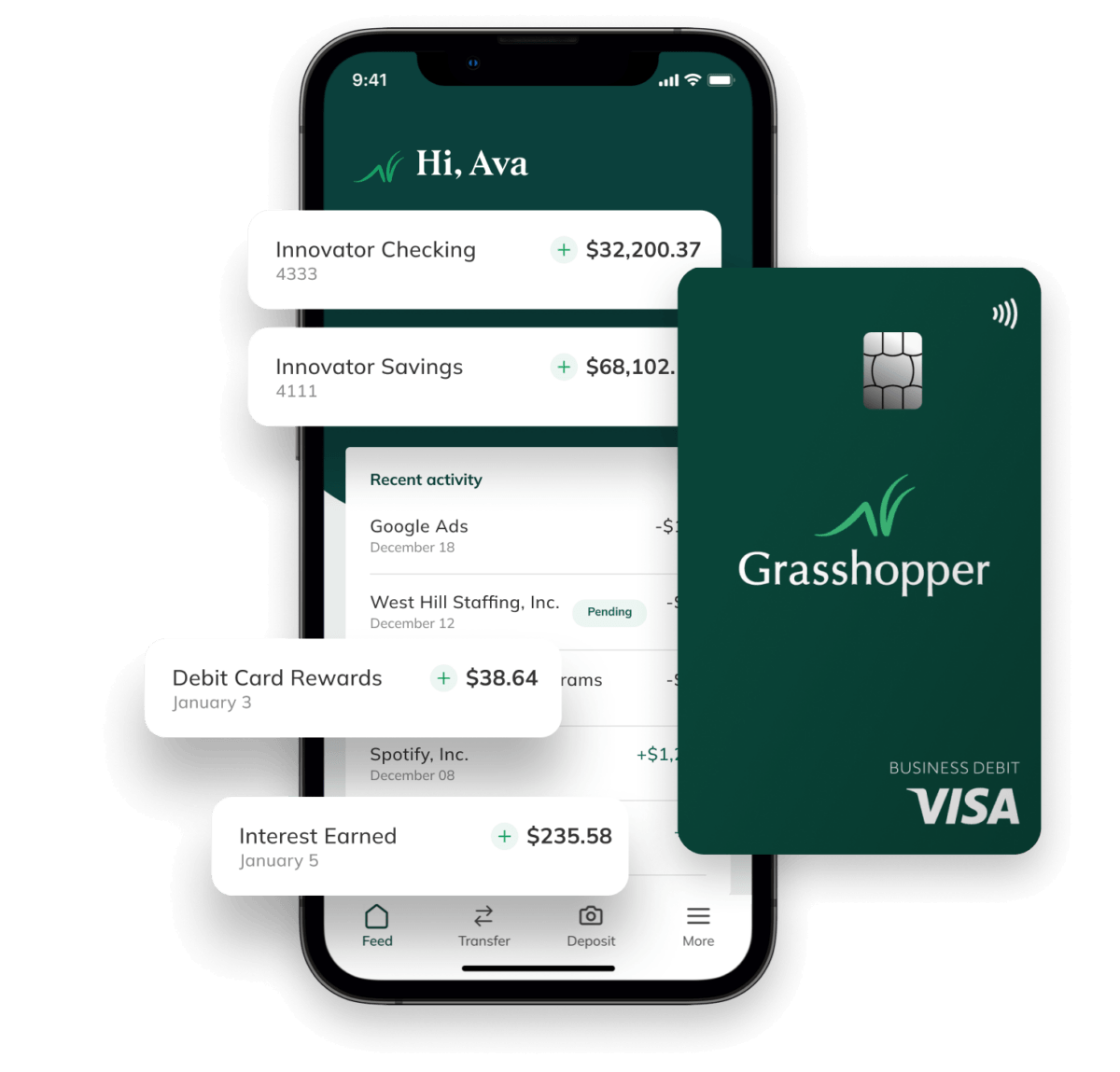
Grasshopper is a fully chartered, FDIC-insured digital bank built specifically for small businesses and startups. Unlike fintechs that partner with third-party banks to hold deposits, Grasshopper holds deposits directly—meaning your funds are protected under standard FDIC coverage without the added complexity of pass-through arrangements. For LLCs that operate primarily online and want a modern, feature-rich banking experience without the fee structures of traditional banks, Grasshopper’s Innovator Business Checking is an excellent fit.

What stands out:

  • Unlimited fee-free transactions and no monthly maintenance fees or minimum balance requirements
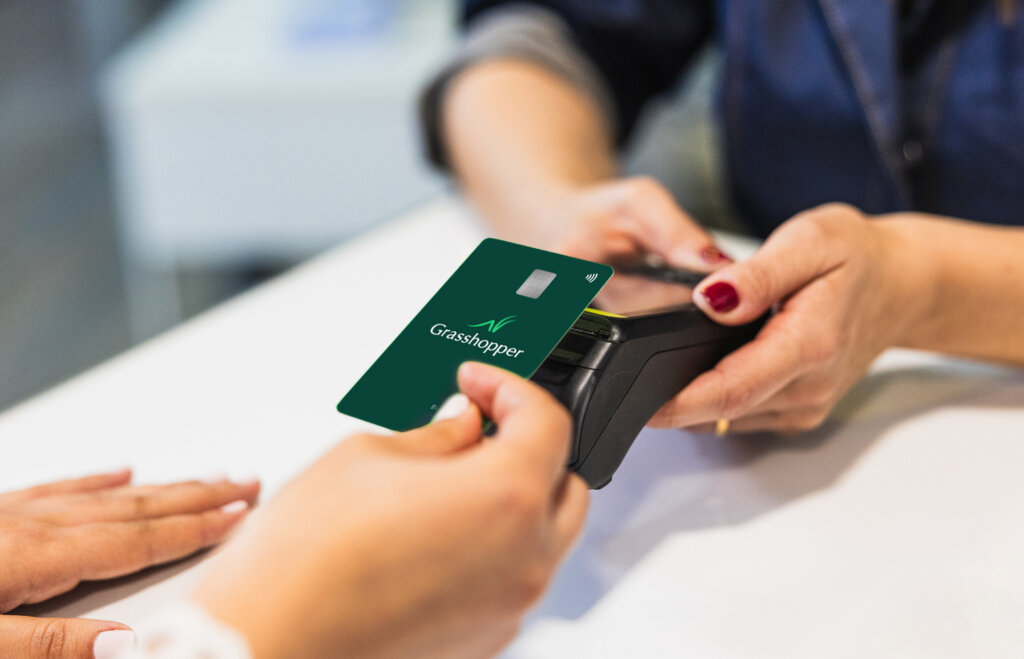
  • Above-average yields and unlimited 1% cash back on online or signature-based debit card purchases
  • Unlimited ACH transfers and free incoming domestic wires
  • Fee-free cash withdrawals at thousands of MoneyPass® and SUM® ATMs nationwide
  • Role-based permission, access controls and dual approvals for high-value or sensitive transactions
  • Award-winning AI connector that supports Claude and Chat GPT
  • Built-in integrations with QuickBooks, Autobooks, Xero, and Plaid
  • Access to Innovator Term Loan, and SBA 7(a) financing
  • Verified .bank domain and bank-level security infrastructure
  • Responsive support via phone, chat, email, and secure messaging
  • Fully digital account opening in minutes

Fees to know:  While the account and platform are largely fee-free, outgoing domestic wires carry a $10 fee and international wires range from $5–$25.

Best for: LLCs that operate primarily online, startups, businesses with high transaction volume, and small business owners who want modern tooling without traditional bank fees.

Limitations: Grasshopper is a cashless digital bank and does not currently support cash deposits, but anticipates rolling out this functionality very soon. LLCs that handle frequent cash will need a supplementary solution for those deposits.

Access powerful digital tools anywhere, anytime

  • Pay Bills Seamlessly
  • Deposit Checks Instantly
  • Instant-Issue Virtual Cards
  • Manage Cash Flow
  • Stay Secure & In Control
  • Automate Bookkeeping
Open an Account

Chase Business Complete Banking — Best Traditional Bank for LLCs

Chase is the largest bank in the United States by assets and offers one of the most widely available branch and ATM networks in the country. For LLCs that value in-person banking access, need to deposit cash regularly, or want the reassurance of a deeply established institution, Chase is a common starting point among traditional banks.

What stands out:

  • Extensive branch and ATM network nationwide
  • Robust online and mobile banking platform
  • Access to a wide range of business products including credit cards, lines of credit, and SBA loans Integration with accounting tools

Fees to know:  The Business Complete Checking account carries a monthly fee of $15, waivable by maintaining a minimum daily balance, making $2,000 in purchases on a Chase Ink Business Card, or accepting deposits through Chase QuickAccept. Transaction limits also apply, and fees take effect after 20 teller or paper transactions per month.

Yield: The Business Complete Checking account does not earn interest.

Best for: LLCs that handle cash regularly, businesses that prefer in-person banking relationships, and owners who want access to a broad suite of traditional banking products under one roof.

Limitations: Monthly fees and transaction limits can add up for high-volume businesses. The fee waiver conditions require active management to avoid charges.

Bank of America Business Advantage — Best Bank for LLCs Seeking Relationship Benefits

Bank of America’s Business Advantage Fundamentals Checking is a solid option for LLCs that want the stability of a major traditional bank with a path toward relationship-based benefits as the account matures. Its Preferred Rewards for Business program rewards LLCs that maintain higher combined balances with reduced fees, higher transaction limits, and discounts on other Bank of America products.

What stands out:

  • Nationwide branch and ATM network
  • Preferred Rewards for Business program with tiered relationship benefits
  • Integration with Zelle for fast business payments
  • Access to business credit cards, lines of credit, and loans

Fees to know: The Business Advantage Fundamentals Checking account carries a monthly fee of $16, waivable by maintaining a minimum average monthly balance of $5,000 or by being enrolled in the Preferred Rewards for Business program. Fees for excess transactions apply above monthly limits.

Yield: The Business Advantage Fundamentals Checking account does not earn interest.

Best for: LLCs with growing balances that want to build a long-term banking relationship with a major institution and unlock relationship-based benefits over time.

Limitations: The fee waiver requires maintaining a $5,000 average balance—a meaningful constraint for newly established LLCs with leaner operating reserves.

Wells Fargo Initiate Business Checking — Best Traditional Bank for LLCs Just Getting Started

Wells Fargo’s Initiate Business Checking is designed for newer or smaller businesses that want the backing of a major traditional bank at a relatively accessible entry point. It offers a lower monthly fee than many comparable traditional bank accounts and a straightforward fee waiver requirement, making it a practical choice for LLCs that are just establishing their banking relationship.

What stands out:

  • Extensive branch and ATM network nationwide
  • Lower monthly fee than many comparable traditional bank accounts
  • Access to Wells Fargo’s broader suite of business products as the account grows
  • Reasonable transaction limits to support low volume

Fees to know: The Initiate Business Checking account carries a monthly fee of $10, waivable by maintaining a minimum daily balance of $500. The account includes 100 transactions per month, with fees applying above that threshold.

Yield: The Initiate Business Checking account does not earn interest.

Best for: Newly established LLCs that want a traditional bank relationship at a lower cost of entry, and businesses that anticipate growing into Wells Fargo’s broader product suite over time.

Limitations: The 100-transaction monthly limit is restrictive for high-volume businesses. LLCs that process significant transaction volume will likely outgrow this account quickly.

US Bank Silver Business Checking — Best Traditional Bank for LLCs Seeking Fee-Free Banking

US Bank’s Silver Business Checking package is one of the few traditional bank accounts that carries no monthly maintenance fee, making it a notable option for cost-conscious LLCs that still want the benefits of a physical branch network.

What stands out:

  • No monthly maintenance fee 125 free transactions per month
  • Access to US Bank’s branch and ATM network

Fees to know: While there is no monthly maintenance fee, fees apply for transactions above the 125-per-month threshold. Cash deposit fees also apply above certain limits.

Yield: The Silver Business Checking account does not earn interest.

Best for: Newly formed or lean LLCs that want a no-fee traditional bank account with branch access, and businesses that keep transaction volume relatively low.

Limitations: The transaction cap limits scalability for growing businesses. Digital tools and integrations are less robust than digital-first alternatives.

Which Bank Is Right for Your LLC

No single bank is the right fit for every LLC. The best choice depends on how your business operates, where it is in its growth stage, and what you need from a banking partner day-to-day.

If your LLC operates primarily online, wants to avoid fees, and values modern tooling and integrations, a digital bank like Grasshopper offers advantages that traditional banks simply can’t match on cost, technology, security or flexibility. If your business handles significant cash volume or requires regular in-person banking interactions, a traditional bank with a strong branch network—Chase, Bank of America, or Wells Fargo—may be the better operational fit, even with the associated fee structures.

For many LLCs, the ideal approach is pragmatic: choose the account that best fits your current operating model, evaluate how well it serves you as the business grows, and don’t hesitate to switch when the fit no longer makes sense. Banking is infrastructure—it should work for your business, not the other way around. As your LLC evolves, reassessing your banking setup ensures your financial stack keeps pace with your growth.

Common Mistakes LLCs Make When Choosing a Bank

Choosing a business bank account is a decision many LLC owners rush through or treat as an afterthought. The result is often an account that creates friction rather than reducing it — one that carries unexpected fees, lacks the integrations your workflow depends on, or simply stops working for you as your business grows. These are the most common mistakes to avoid.

  • Defaulting to their personal bank: Familiarity is not the same as fit. The bank that works for your personal finances may not offer the features, fee structure, or tools your LLC needs.
  • Choosing based on sign-up promotions: A one-time bonus doesn’t offset ongoing fees or poor functionality. Evaluate accounts on their long-term cost and fit, not their introductory offer.
  • Not reading the full fee schedule: Many accounts that appear affordable at first glance carry charges for ACH or wire transfers, excess transactions, or cash deposits that accumulate significantly over time. Review the complete fee schedule before opening any account.
  • Ignoring how the account scales: An account that works well at launch may become limiting as transaction volume grows, team size increases, or lending needs emerge. Think about where your LLC will be in 12 to 24 months, not just today.
  • Overlooking integration compatibility: Confirm the account connects with your accounting software, payroll platform, and payment processors before opening—not after. Manual data entry is time-consuming, introduces errors, and scales poorly as transaction volume grows.
  • Not verifying FDIC insurance and deposit structure: Confirm that any bank you’re considering is FDIC-insured and that your deposits are held directly by the institution—not through a third-party partner arrangement that adds complexity to your protections.

The Bottom Line

Choosing the best bank for your LLC isn’t just an administrative task—it’s a foundational financial decision that affects your legal protection, operational efficiency, and access to capital as your business grows. Take the time to evaluate your options against how your business actually operates, not just which is most convenient or name is most recognizable.

The right banking partner reduces friction, protects your funds, and gives you the tools and support to operate your business with confidence from day one. Whether you’re just forming your LLC or reassessing a banking relationship that’s no longer serving you, the options above give you a clear starting point for making the right choice.

Ready to open an LLC bank account built for the way modern businesses operate? Take the leap with Grasshopper and open an Innovator Business Checking account to experience the difference the right banking partner makes.

Polina Furman

Polina Furman is a content and marketing strategist with experience across fintech, venture capital, and Consumer Packaged Goods. At Grasshopper Bank, she supports the marketing team by analyzing competitive trends, refining social strategy, and creating high-impact content that strengthens the brand’s digital presence. Previously, she worked with SPIN Labs, a media and technology venture incubator, supporting early-stage startups through business development and investor outreach, and at HIRASKIN™, where she led B2B sales and marketing initiatives for luxury spa and hospitality clients.

We don't support Internet Explorer

Please use Chrome, Safari, Firefox, or Edge to view this site.

Privacy Overview

This website uses cookies so that we can provide you with the best user experience possible. Cookie information is stored in your browser and performs functions such as recognising you when you return to our website and helping our team to understand which sections of the website you find most interesting and useful.