Artist to Entrepreneur: PostCurious' Top 4 Tips for Aspiring Small Business Owners
Learn how passion, planning, and the right financial partner has helped PostCurious thrive and how those insights can apply to your business.

Learn how passion, planning, and the right financial partner has helped PostCurious thrive and how those insights can apply to your business.
Starting a small business can be both exciting and challenging, especially when it grows from a deep personal passion and the desire to bring your creative vision to life. We recently had the opportunity to sit down with Rita Orlov, Designer & Founder of PostCurious, an innovative tabletop game publisher, to learn from her journey and share valuable advice for aspiring artists, entrepreneurs and small business owners.
Here are some reflections and insights from the conversation:
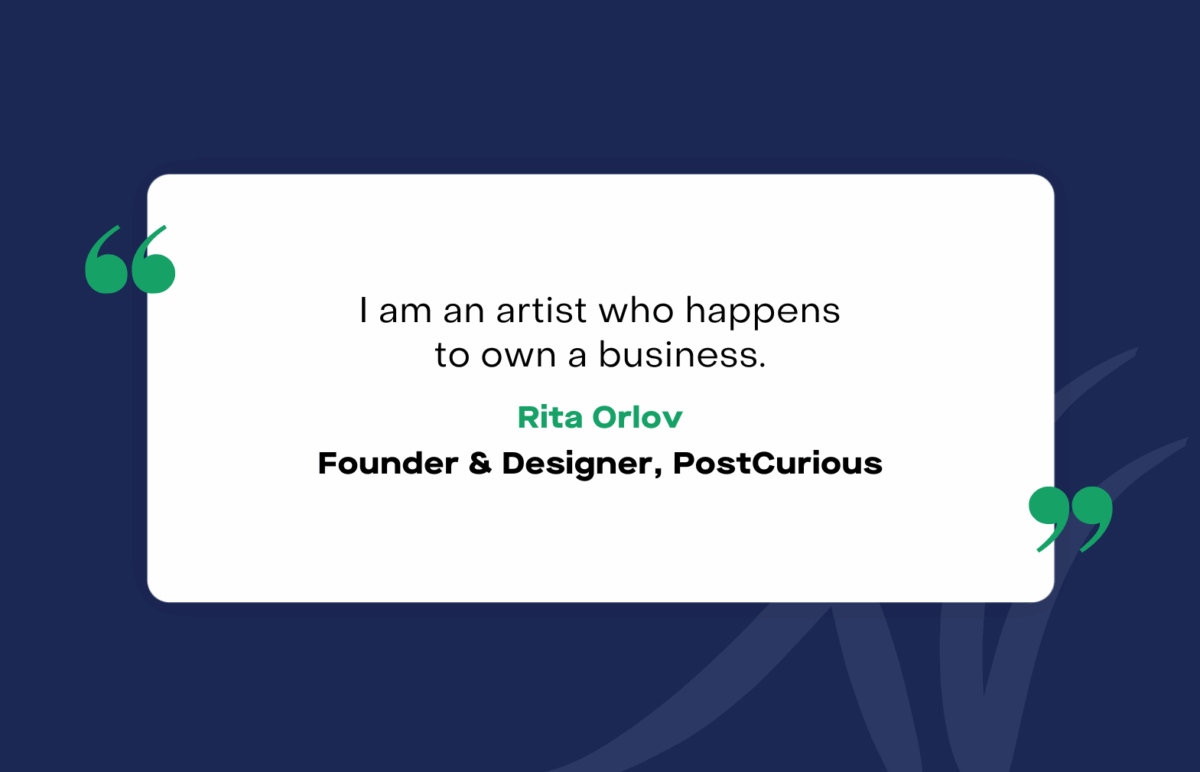
One of the most important lessons from our conversation with Rita is the value of grounding your business in genuine passion. Because when your work comes from a place of passion, and you create something you truly love, it resonates more deeply and inspires others to engage, connect, and find meaning in what you share. As Rita puts it, “I am an artist who happens to own a business.” This mindset reminds us that meaningful work isn’t just about the product itself, it’s about the story behind it, the purpose that drives it, and the connection it creates with others.
If you’re thinking about turning a passion into a business, it’s also crucial to consider how your creativity can serve others, not just yourself. Rita focuses on making “cool and interesting products that people enjoy playing.” This approach highlights that successful entrepreneurship often requires a shift in mindset from creating purely for personal fulfillment to creating with purpose. By doing so, your business becomes a way to share your passion and bring value to your community, customers, or audience.
One of the early lessons Rita learned was the importance of maintaining clear boundaries between personal and business financials. That means not just tracking expenses carefully, but also ensuring that your business operates from a proper business banking account—not your personal one.
This distinction is essential for staying organized, protecting your personal assets, and presenting your business as legitimate in the eyes of banks, accountants, and potential partners. Clear separation makes tax time significantly easier and helps build the credible financial history that’s often required when applying for loans, credit lines, or other growth-related funding opportunities.
Rita’s experience also highlights an essential but often overlooked consideration: relocating your business across state lines can come with unexpected legal and financial consequences. When she moved from New York to California, she learned that some states—like California—don’t allow you to transfer an existing limited liability company (LLC). As a result, she had to dissolve her original LLC and form a new one, which also meant receiving a new employer identification number (EIN). On paper, it looked as though she was launching an entirely new business—even though PostCurious had already been operating for several years.
“I had to essentially restart the business,” she explains. “Certain states don’t allow you to transfer an LLC. It varies from state to state.”
This reset created unanticipated challenges when she tried to access funding, particularly after hiring her first employee and experiencing different cash flow dynamics. Lenders and underwriters often evaluate risk based on business longevity, and with the new EIN in place, Rita no longer had the established financial track record she had built in New York. It delayed her ability to qualify for credit lines and loans, despite her company’s proven performance. It’s a valuable reminder that when relocating, it’s not just your physical location that changes—your business’s legal and financial standing may shift too. Carefully researching state-specific business laws and speaking with legal or financial advisors in advance can help avoid costly disruptions.
You don’t need to have everything figured out on day one. One of the biggest takeaways from Rita’s journey is just how much you can learn along the way—especially online. The internet offers a wealth of resources to help you navigate every step of the entrepreneurial process, from starting your business and opening a bank account to managing finances, securing capital, and scaling your operations.
But beyond the logistics, the internet also opens doors to meaningful relationships and opportunities. It allows entrepreneurs to connect with customers who are aligned with their values, collaborators who can help bring new ideas to life, and niche communities that offer both support and inspiration. Whether it’s sharing your work on social media, finding suppliers through online marketplaces, or networking in industry-specific forums, the digital world makes it possible to build a business that’s not limited by geography. For small, passion-driven businesses like PostCurious, this kind of global reach can be the key to finding your audience and growing authentically.
When you’re creating something you truly care about, every decision—from how you manage your finances to how you connect with your audience—matters. By sharing these tips, we hope to encourage other artists and small business owners to pursue their creative endeavors with the same sense of purpose and perseverance that passion inspires.
Whether you’re designing, building, or storytelling, Grasshopper offers modern digital banking tools, straightforward pricing, and real human support—so you can spend more time focusing on your craft while we handle the finances. Join thousands of artists, creators and small business owners who have found a simpler, smarter way to manage their finances by opening a Grasshopper business account today!
Brana Webb is a versatile marketing professional with a decade of experience leading brand, content, and digital strategies across industries ranging from financial services to consumer goods. With 8+ years of experience driving brand growth and customer engagement across the banking and fintech space, she has developed a strong track record of translating complex ideas into compelling campaigns that resonate with target audiences. In her current role at Grasshopper, she leads strategic marketing initiatives that support product launches, deepen client relationships, and fuel business growth. With a background spanning both in-house and freelance work, Brana brings a thoughtful, creative, and data-informed approach, helping teams connect more meaningfully with their audiences and move faster toward their goals.